A sustainable activewear brand built from the ground up- exploring e-commerce design, platform selection, and the journey from WordPress / WooCommerce to Shopify as the business scaled.
Role: Founder, Designer, Developer
Timeline: 2023 - Present
Platforms: WordPress, WooCommerce → Shopify
Focus: E-Commerce, Branding, SEO, Platform Migration
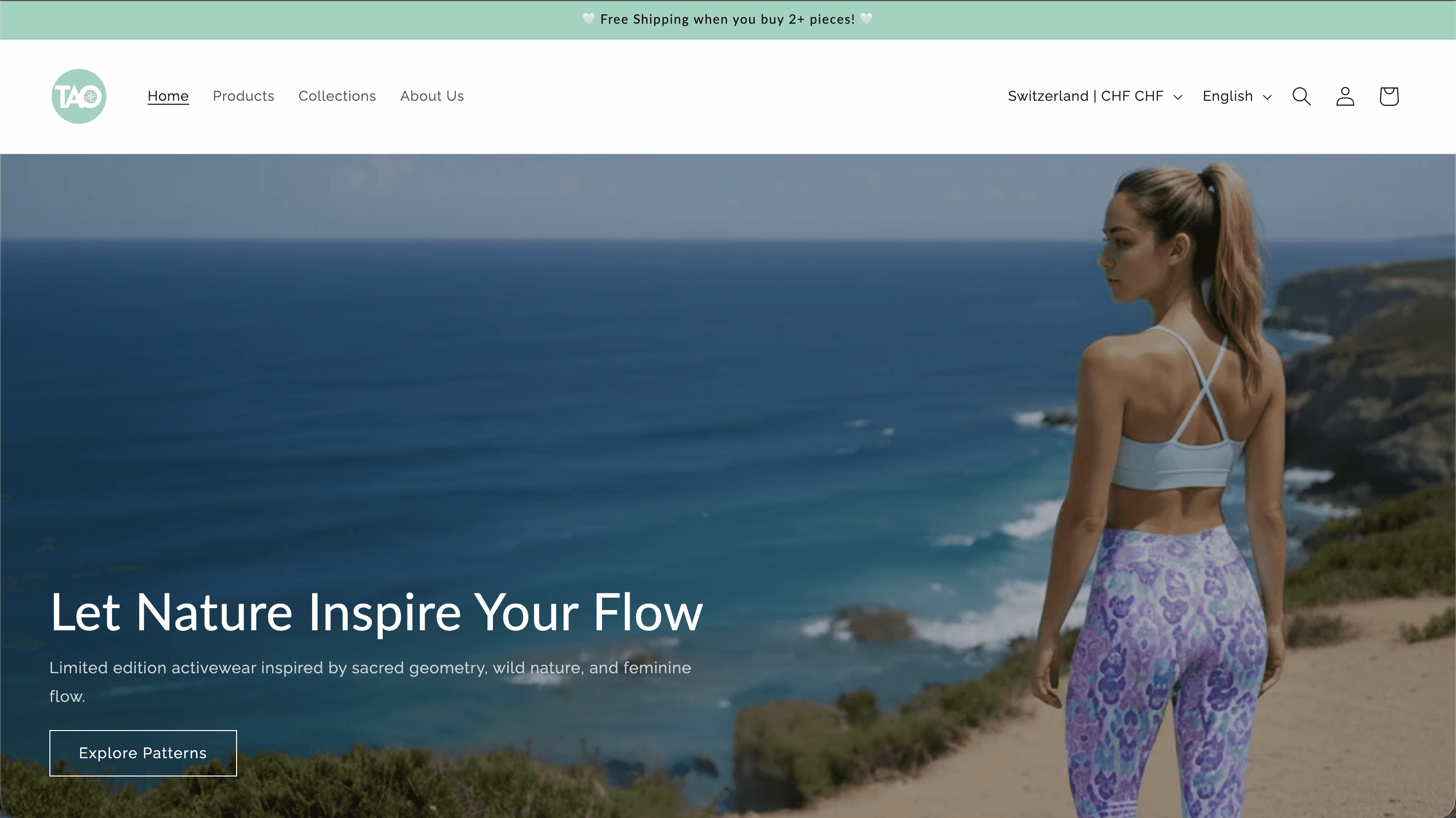
TAO Infinity is a sustainable activewear brand I founded in 2023 as a comprehensive e-commerce learning project. What started as a test store with a handful of products evolved into a catalog of 100+ SKUs, requiring a complete platform migration to handle the operational complexity.
This project gave me hands-on experience in every aspect of e-commerce: product photography, catalog architecture, platform selection, SEO strategy, and the practical trade-offs between flexibility and scalability.
When launching TAO Infinity in 2023, I needed to:
Build a scalable foundation for 100+ products
Create efficient workflows for product management
Establish a brand identity through product photography and content
Structure collections and navigation for future growth
Optimize for organic search from day one
Learn e-commerce fundamentals through real-world application
Initial platform choice: WordPress + WooCommerce for its flexibility and low cost.
I chose WooCommerce for the initial build because it offered complete control and low overhead. I built out custom product pages, organized collections by activity type, created a blog for SEO, and developed the brand's visual identity through product photography.
What worked:
Full design flexibility
No monthly platform fees
Complete control over structure and code
What became challenging:
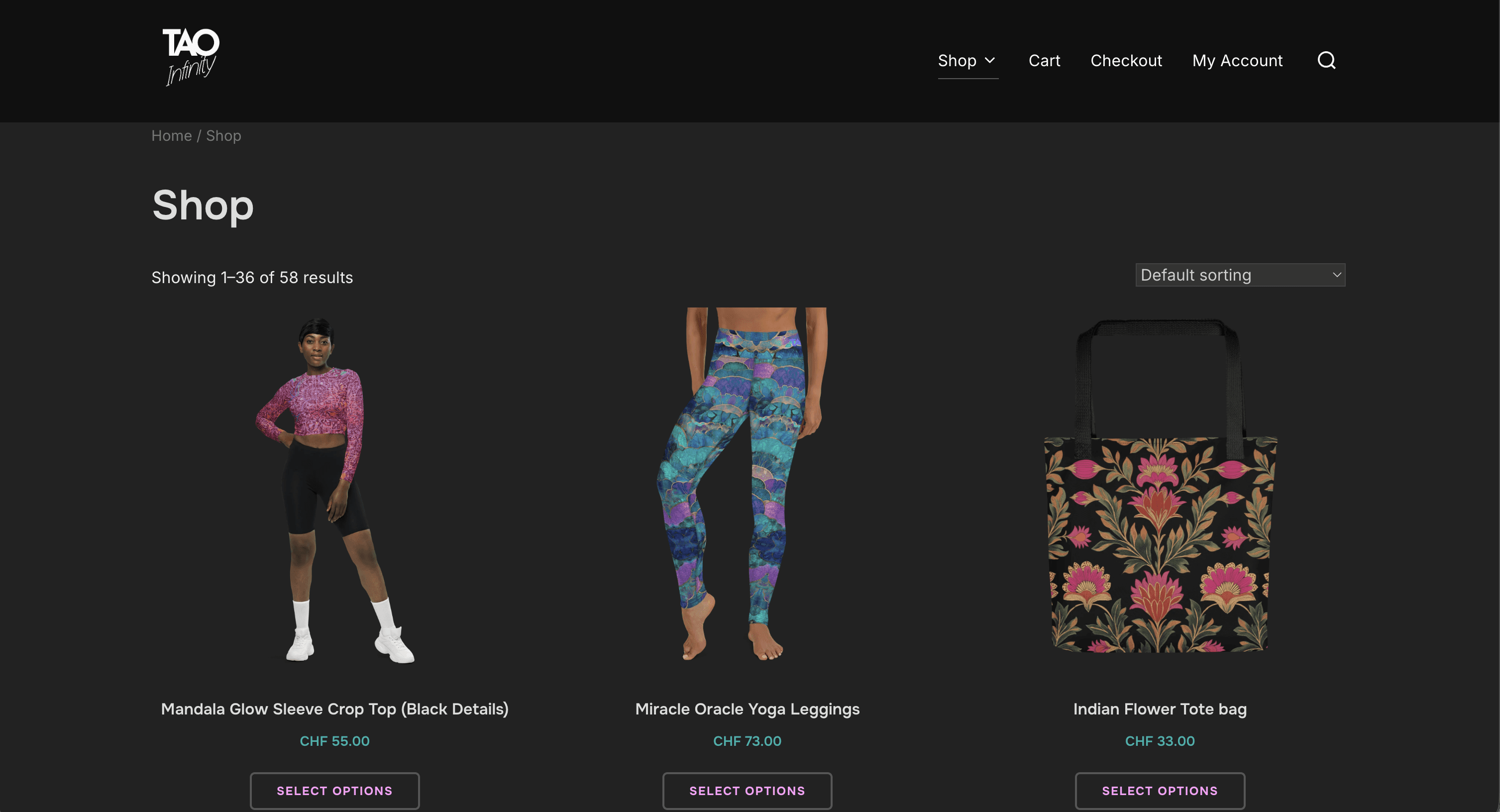
Homepage became visually overwhelming with too many competing sections
Every collection wanted its own hero section with pattern backgrounds
Performance optimization required constant attention
Managing 100+ products became time-consuming
Mobile experience needed significant custom work
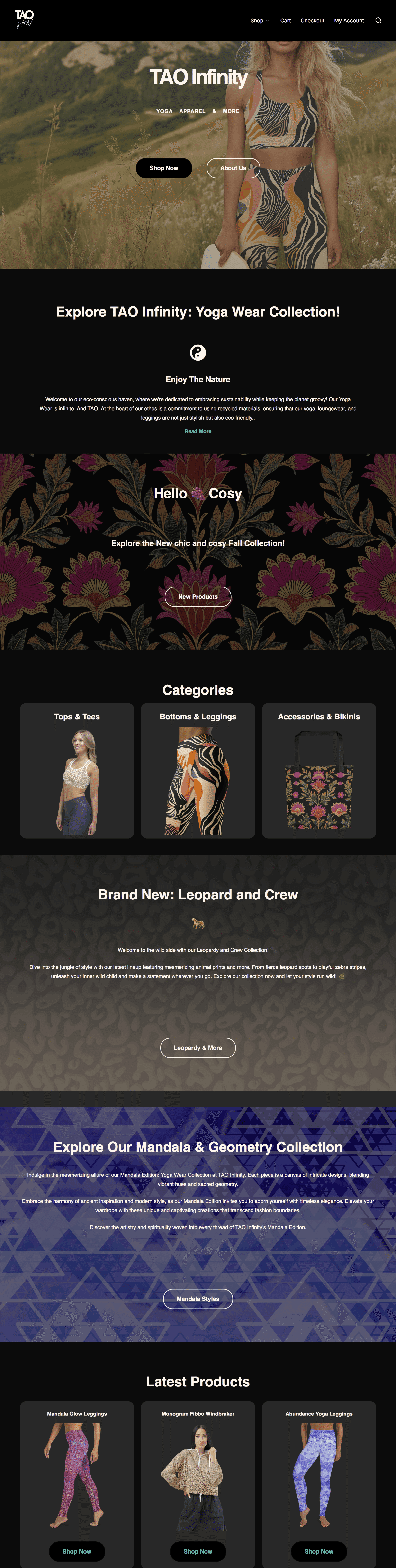
As TAO Infinity grew from 10 to 100+ products, WooCommerce's limitations became increasingly clear. The decision to migrate wasn't driven by traffic volume, but by operational efficiency and the need to scale the product catalog intelligently.
Key factors:
Performance: Page load times increased despite optimization efforts, especially with heavy pattern backgrounds and multiple hero sections
Operational Overhead: Each product required 15-20 minutes to upload and optimize. With 100+ products, this added up quickly.
Design Complexity: The first version tried to do too much—every collection had its own visual identity, creating a cluttered experience rather than a cohesive brand.
Mobile Experience: Achieving smooth mobile performance required extensive custom CSS work
Scalability: Adding another 50-100 products would multiply the maintenance burden significantly
Decision: Migrate to Shopify to focus on design, photography, and content—not platform maintenance. Use the migration as an opportunity to simplify and refine the user experience.
The migration wasn't just a platform switch—it was an opportunity to refine the entire experience based on what I learned from version one.
Migration Process:
Product data export, cleanup, and restructuring
URL mapping to preserve SEO rankings
Theme selection and customization
Collection reorganization with clearer hierarchy
Mobile-first layout optimization
Design Improvements:
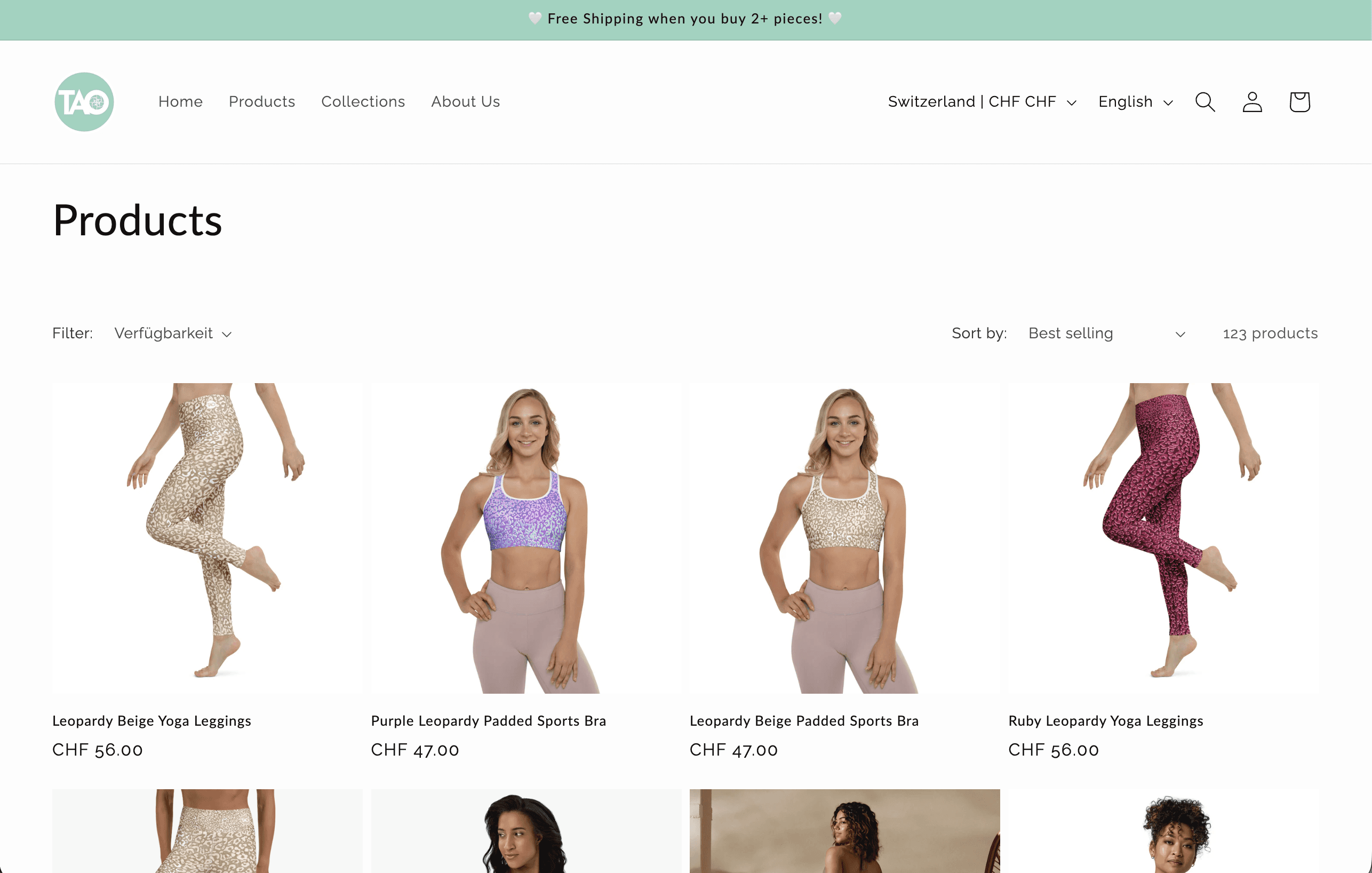
Simplified homepage—removed competing pattern sections
Cleaner product page layouts with better photography focus
Streamlined navigation structure
Faster, more intuitive checkout flow
Better visual hierarchy and breathing room
Consistent brand identity across all pages
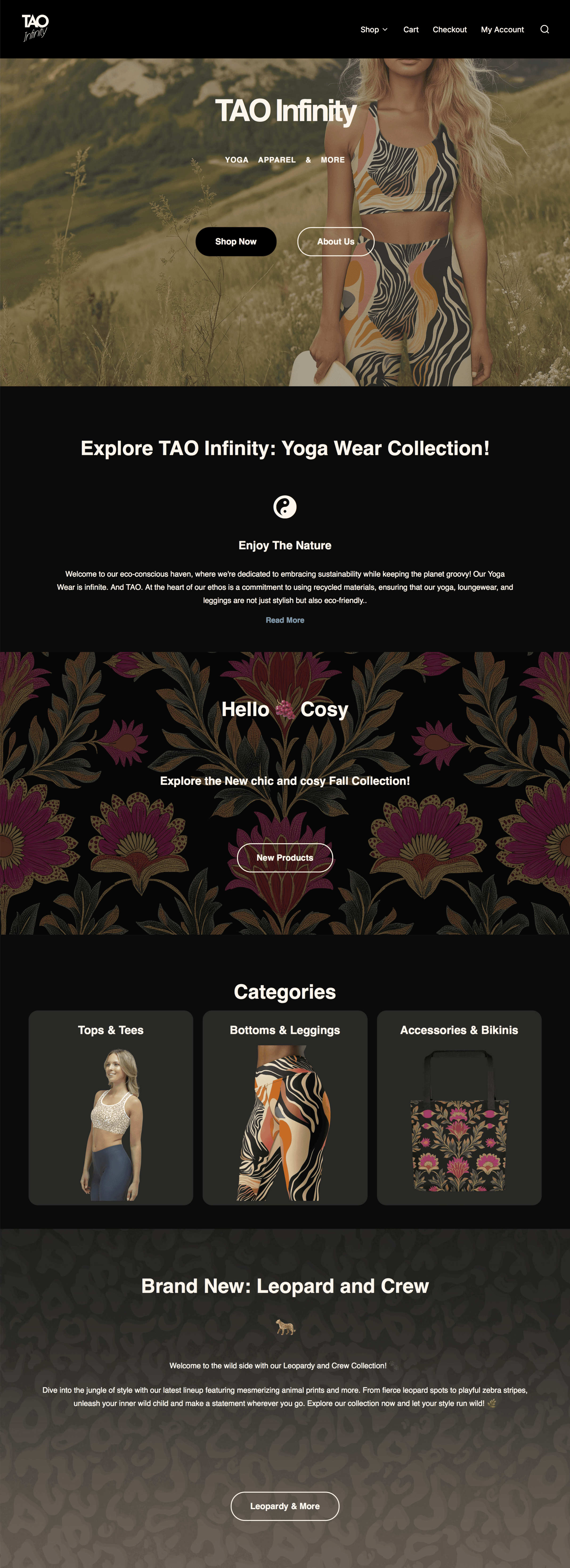
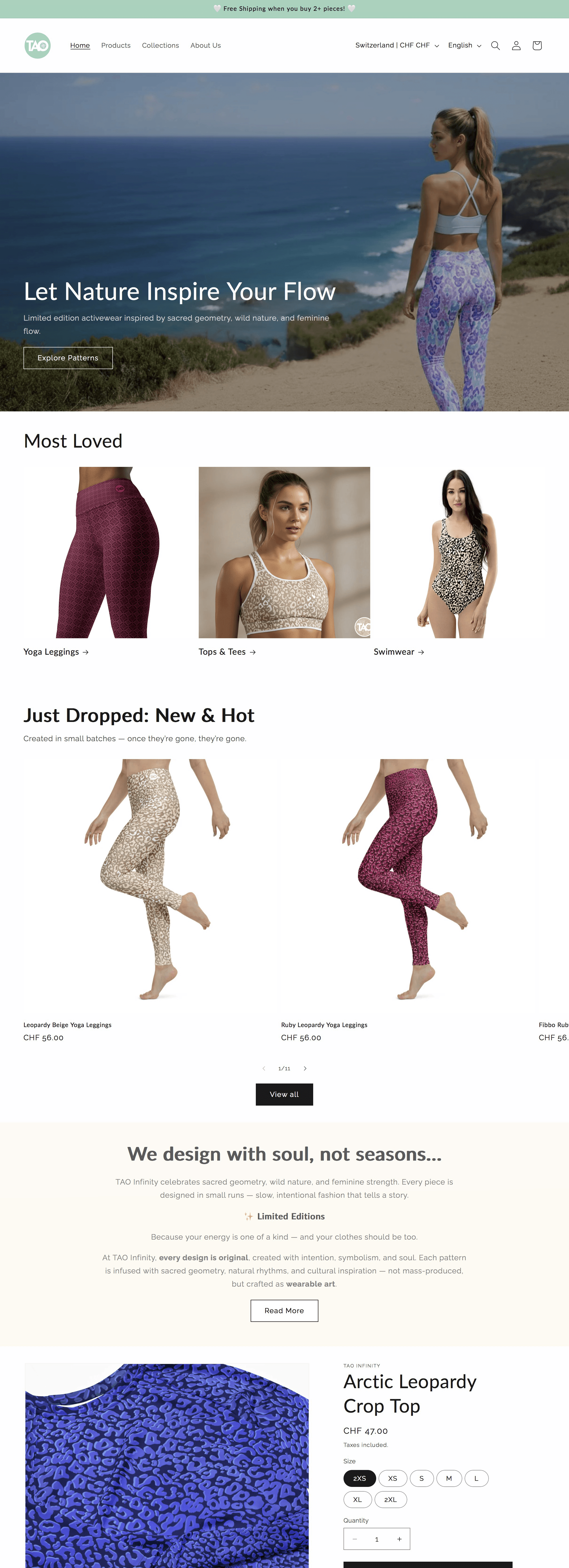
The migration transformed how I work with the store:
Operational Efficiency:
Product management time reduced by 60%
Collection updates: 30 minutes → 5 minutes
Image optimization: Automated vs. manual handling
Weekly maintenance: 4 hours → 30 minutes
Technical Improvements:
Cleaner, more focused design
Better mobile performance
Faster page loads
Simplified content management
User Experience:
Less visual clutter
Clearer navigation
Product-focused layout
Consistent brand identity
Scalability:
Ready to handle 200+ products without workflow issues
Clean architecture for future growth
Efficient content management system
Both versions of TAO Infinity are still live. You can explore the differences firsthand and see how the migration improved the user experience.

Platform Selection:
WooCommerce works well for complex, custom requirements
Shopify excels when you want to focus on design and content over maintenance
No platform is "better"—it depends on project needs and growth stage
Design Lessons:
Less is more—the first version tried to showcase everything at once
Visual hierarchy matters more than visual complexity
Breathing room improves user experience
Consistency builds brand trust
E-Commerce Fundamentals:
Product page structure directly impacts conversion
Site speed matters more than decorative elements
SEO requires consistent, long-term attention
Operational workflow determines what you can scale
Skills Developed:
Platform migration strategy and execution
E-commerce UX patterns and best practices
Product photography and presentation
SEO for product pages and collections
Catalog architecture and data structure
This project taught me how to balance design, technical implementation, and business needs in real e-commerce scenarios. Let's talk about how I can help with your next project.